
See you on Twitter!
See you on Twitter!
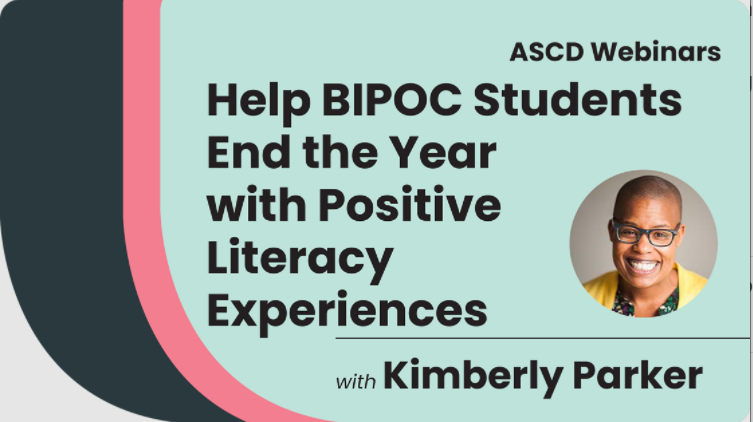
I’m having a free webinar hosted by ASCD where I’ll be thinking through how to gather ourselves and end the year positively for our BIPOC students.
I’ll be pulling bits from my forthcoming book, Literacy is Liberation: Working Toward Justice Through Culturally Relevant Teaching, now available for pre-order.
Register here. Hope to see you soon!
Filed under Literacy Is Liberation
I continue to be coming around to my new reading life which is, as this moment, out of sync with how I used to read. I have leaned hard into books that I want to read, not should or need to read, but ones that I want to read. That got me into a groove last year and I hope it will anchor me through 2022, also.
If you’re interested in 2021 and 2020, those links are also here for you.
January 2022
The Love Songs of W.E.B. DuBois by Honoree Fanonne Jeffers
I couldn’t stop reading this one once I began. A few years ago, I remember reading Pachinko as voraciously. Like, unable to do anything except perform basic functions because I was absolutely consumed by this intergenerational, historical, contemporary, beautiful novel about Black women and mothering and legacy, and race and…it’s incredible. I’d definitely have it in classrooms and I’d also consider putting it into conversation with The Known World by Edward P. Jones. Jeffers’ characters stay with you. I haven’t stopped thinking about them since I finished the book. A fantastic way to start a new year. Anchored in Black women.
February 2022
This Close to Okay, Leesa Cross-Smith
I have a soft spot for Leesa Cross-Smith after loving her So We Can Glow, a collection of excellent short/flash stories. This novel is about two people who find each other at moments when they are both fragile (CW: suicide, just know that). Then, they put each other back together-ish, in ways that are humane and realistic and that make you really grateful for folks who take the time to check in on us. Leesa C-S writes a beautiful sentence; she’s the type of writer who actually uses interesting words throughout, and those words are delightful and surprising, and memorable. Truly enjoyed this book, suspended all doubt while reading it, and was glad I did because the novel was quite satisfying.
The Ones Who Don’t Say They Love You, Maurice Carlos Ruffin
I was preparing for a trip to New Orleans and wanted a book to help me ease back into that vibe. Ruffin’s collection of short stories was unexpected, heartbreaking, and fabulous, all at the same time. He writes well, encouraging you to take a second, third, and even fourth look at sentences and the people and places within them. They are important glimpses of the people whom, as a tourist, one might overlook or not pay attention to, or even think they’ve come to New Orleans to forget. However, Ruffin insists we pay attention, hear the stories, consider who we don’t see, or choose not to see, when we visit these places.
This Boy We Made: A Memoir of Motherhood, Genetics and Facing the Unknown, Taylor Harris
March 2022
While We Were Dating, Jasmine Guillory
A Map Is Only One Story: Twenty Writers on Immigration, Family, and the Meaning of Home, Edited by Nicole Chung and Mensah Demary
Somebody’s Daughter: A Memoir, Ashley Ford
April 2022
Fiona and Jane, Joan Chen Ho
Brown Girls, Daphne Palasi Andreades
May 2022
Lakewood, Megan Giddings
Punch Me Up to the Gods: A Memoir, Brian Broome
June 2022
Cafe Con Lychee, Emery Lee
Take My Hand, Dolen Perkins-Valdez
Memphis, Tara M. Stringfellow
July 2022
Instructions for Dancing, Nicola Yoon
August 2022
You Are Your Best Thing: Vulnerability, Shame, Resilience, and the Black Experience, Brene Brown and Tarana Burke
By the Book, Jasmine Guillory
Set Boundaries, Find Peace, Nedra Tawwab
September 2022
Olga Dies Dreaming, Xochitl Gonzalez
November 2022
Be Not Afraid of Love: Lessons on Fear, Intimacy, and Connection, Mimi Zhu
Killing the Black Body: Race, Reproduction, and the Meaning of Liberty, Dorothy Roberts
Notes on Shapeshifting, Gabi Abrao
December 2022
Man Made Monsters, Andrea Rogers and Jeff Edwards
Borders, Thomas King and Natasha Donovan
Ride On, Faith Erin Hicks
More Than Organs, Kay Ulanday Barrett
How To Do the Work: Recognize Your Patterns, Heal From Your Past, and Create Your Self, Dr. Nicole LePera
Filed under Reading Lives
Hi there. It’s been a minute, I know. But I’ve been doing some things: trying to live through a pandemic, starting a new job, and, well, writing a book. Literacy Is Liberation: Working Toward Justice Through Culturally Relevant Teaching with ASCD is coming out in February, 2022. CAN YOU BELIEVE IT?

SAME.
It’s definitely been a process. And, because I’m celebrating submitting the page proofs a moment ago, I immediately wanted to capture a few feelings before I forgot them. Here they go, in no particular order…
I know this picture above might be familiar to some people, as I posted it on social media, but the FEELING of having the page proofs in my hand, and to be celebrating over hot pot with my dear friend after so much time apart, was something I wanted to hold on to. Thus, I put this picture here to remind myself of the joy that also accompanied this project.
I am going to put in a plug for finding yourself a really good editor to bring you along. I worked with the fabulous Acquisitions Editor, Allison Scott, from ASCD who presented me with a timeline and helped me get my goals together. She was also the best warm demander/cheerleader I needed. I also got experience writing for ASCD in different mediums: shorter pieces that helped me define my voice, get feedback, and make decisions about what I wanted, and needed to write about. It’s like the low-stakes practice we get young writers to do daily; so much so that when the bigger thing comes along, you’ll have been mentored, received feedback, and feel ready to take the next right step for you.
Please, now, write a book. If you want to. Or reach out to someone (like emailing Acquisitions at ASCD) to talk through ideas and help chart a path forward (plus, it’s FREE). I mean, people have been telling me for a looong time I “should” write a book, but it was only when the time, place, and publisher aligned did it make sense for me to do. If that time is for you, then, I hope you’ll do it, because, especially for BIPOC folks, there is SO much we know and do that others need to understand, and there are publishers who are so interested in our stories that they’ll help us along: mentorship, guidance, and publishing. Our stories are powerful; get to writing!
I loved concluding the series this year. It allowed me the time to go back, reread and savor the gift that #31DaysIBPOC is. I was able to be moved over and over again at the range of experiences, the brilliance of the writing, and the complexities of living.
Thank you to everyone who wrote, to everyone who read and shared these essays, and who will continue to revisit them in the year to come. To our growing family of supporters: Please support these professionals! For the ones who have Venmos or causes they support, donate in solidarity or to say thank you. If you are looking for people to lead your professional development, please, hire these folx and all the folx who have written for the series over these three years. And, of course, please pay them what they are worth.
I pulled lines from all this month’s posts to compose this found poem of gratitude for all of our writers and to close out May.
The highest gratitude goes to my dear friend, Tricia Ebarvia, who is the very best collaborator I could have wished for and who is proof that I am abundantly blessed with so many good people in my life. Be well, everyone.

Found Poem for #31DaysIBPOC
Because I come from a lineage of strong-willed, determined, fierce women I foolishly thought I was invincible.1
I didn’t talk about this Black soul scar with my parents until I was 43 years old.2
Imagine being afraid to sleep for days, months, years, and lifetimes and you will still only understand a fraction of my rage, my exhaustion, my fear, my loneliness, and my deep, deep sorrow.3
Today, I am ready to tell the story of my darkest times, to reckon with these times publicly because in the light, there is healing.4
You are not made for simple palates.5
I knew the power of stories, that’s why I began telling stories in the first place.6
I shudder to think of all the cultural pride I sacrificed at the altar of attempted assimilation over the years.7
What is “excellent” about lacking the courage to face our history, learn from it, and forge a path forward that is not built on the backs and blood of Black people, the theft of indigenous land, and the criminalization and imprisonment of those we fear?8
A Palestinian mama has no control over her fate or the fate of her children. Her daughter is a Palestinian.9
If we truly believe that we want schools to be a safe place for students, why aren’t they?10
Despite my own experiences and intimate knowledge of the variations of being Black, here I was limiting my view of Black students and what they would need and where they would be. 11
I will not traumatize you based on YOUR cultural identity and connections to family, place, land, tradition, and language; rather it will be a celebration ALL year.12
I want more parents to ask questions. I want educators to welcome their questions, and when necessary, I want us to change what we’re doing in the classrooms or spaces where we teach.13
And all that I had lost, willfully lost…was it too late to reclaim? 14
But she has shown me, even still in these struggles, we resist, we love and we find joy.15
Sitting next to all that is too much are also other things, things like truth, community, kinship, and love.16
The difference between me as a child and me as an adult is that as an adult, I don’t listen to other voices to validate my own experiences anymore.17
I center Black joy and Black folx living they regular degular lives in my instruction.18
We need to resist through joy. We feel it deeply. We feel it urgently.19
Our power resides in our collective strength. We are what we are seeking.20
As a Black person I couldn’t believe that escaping for freedom was even debatable.21
They may fire their cannons or launch their missiles, but I stand firm with my flag erected, for I will fight no more.
Representation is important but that is only a step toward liberation.22
I am getting better at reminding myself that those who harbor hatred need to work on themselves…and get out of my/our way.23
You are a divine being worthy of rest.24
You, showing up exactly as you are, isn’t just good enough–it’s inspiring, and brave, and powerful.25
We can be the love we need and the joy this world tries to take away.26
We can come to realize how small our world is and how big the rest of the world is but, even with our wings clipped, we can visit beyond the margins of our cage.27
We shall revel in the abundance of each other.28

This blog post is part of the #31DaysIBPOC Blog Series, a month-long movement to feature the voices of indigenous and teachers of color as writers and scholars. Please CLICK HERE to read yesterday’s blog post by shea martin(and be sure to check out the link at the end of each post to catch up on the rest of the blog series).
Filed under #31DaysIBPOC
JANUARY

Luster, Raven Leilani
A working class Black girl’s struggle to find herself while navigating a complicated relationship with her white male lover.
Finna, Nate Marshall #blackboylit
A moving book of poetry about Blackness, love of Black people, and Chicago.
The Girl with the Louding Voice, Abi Dare
A young Nigerian girl overcomes a tremendous number of hardships, holding true to her desire to be educated and to find her voice.
Concrete Rose, Angie Thomas #blackboylit
Maverick Carter’s story is powerful: teenage father learning to find his voice and his own power. It will make you immediately go reread The Hate U Give
FEBRUARY
Memorial, Bryan Washington
Queer love story about a Black man and his Asian lover, a dying father, family dynamics, and what happens when a relationship can (and should?) end. It’s not easy, by any stretch of the imagination.
MARCH
Black Kids, Christina Hammonds Reed
I appreciate this book for breaking me out of my reading rut. Fabulous, thoughtful, complex look at a young Black girl who is wealthy, goes to school in a predominantly white environment, and is trying to figure out all the identities she has and wants to be. I’d also use this book as a craft study b/c Hammonds Reed can write a brilliant sentence, and this book has so many. One of my faves of the year at this point.
APRIL
You Should See Me In a Crown, Leah Johnson
I continue to turn to YA as a way to get my reading life restarted. Liz Lighty is an overachieving Black girl who wants to go to the local PWI more than anything. She’s queer, which is hard in a small Indianapolis town, made even more complicated because she runs for prom queen. I felt for Liz, who has be to exceptional in every way, struggles with anxiety, and the loss of her mother, and, well, being working class in a white midwestern town.
MAY
We Are Not Broken, George M. Johnson
Another entry to the #blackboylit canon that gives us a nonbinary young person living their best life. This was a great example of all the ways young people can grow up whole, free, and supported by a loving community. A memoir in vignettes, too!
Things We Couldn’t Say, Jay Coles
I read this one with the Johnson book above in preparation for moderating a panel for SLJ’s Day of Action. Another #blackboylit title. I so appreciated the main character, a bisexual Black boy who experiences depression, a missing parent, and falling in love. I loved Gio so much, and also appreciated his comments about school, lol, especially being dragged through a reading of To Kill A Mockingbird.
The Secret Lives of Church Ladies, Deesha Philyaw
This book got me OUT of my reading rut. Just an excellent collection of short stories about Black women that is beautifully written, funny, sad, healing…just everything. I wished it was longer, have recommended it as my favorite book this year, and gift it, too.
JUNE
Fugitive Pedagogy: Carter G. Woodson and the Art of Black Teaching, Jarvis Givens
I stan for Dr. Givens and his scholarship because it helps me locate myself in the tradition of the art of Black teaching. Lots about the life of Carter G. Woodson, Black teachers, and why what we do matters even more today. It’s also an important reminder that as teachers we need to be “scholars of the practice” and make time to read scholarship.
The Prophets, Robert Jones, Jr.
This queer love story set during enslavement was moving and reminiscent of Morrison in so many ways. I loved the love and resistance of characters and felt such deep sorrow to read about the ancestors, real and imagined. Once I started, I read right through the days to finish, and the two men at the center of the story, and their insistence on loving each other, was so very powerful and beautiful.
Excuse Me While I Ugly Cry, Joya Goffney
Just a fun YA book, perfect for the summer. See my Twitter thread about loving this book and why it’s SO necessary.
Barracoon, Zora Neale Hurston
This book came up at the library and I’ve been wanting to read it. The story of Kossola, the last survivor of the Clotida, is devastating. It’s important for understanding the impact of enslavement, how Africans were treated by African Americans, and the lasting legacy that so many of us carry with us. Required reading. Plus, it’s a powerful account of the anthropological work of Zora Neale Hurston.
The House of Historical Corrections, Danielle Evans
I’m a Danielle Evans fan. Her first short story collection is one of my all-time favorites. This second collection is even more brilliant. She can write a beautiful sentence and tell a brilliant story while breaking your heart and affirming your Blackness and brilliance all at once. These short stories are definitely teachable in high school classrooms, too, and ones I wish I had access to when I was looking for something different for my own short story units…
JULY
So We Can Glow, Leesa Cross Smith
Seems like the universe is trying to help me find my way back to my reading life. These short/micro stories are delightful. Lots take place in Kentucky, so that’s even more special to me, and Cross-Smith is SO good at writing about women in the everyday. I felt so seen while I read this collection in all parts of my life: high school, college, post-college, now.
Act Your Age, Eve Brown, Talia Hibbert
I finished the final book of Hibbert’s trilogy and found it quite satisfying. Hibbert’s characters are funny, thoughtful, smart, and real. A great easy breezy read that also features characters with autism, depicted multidimensionally, where the characters are so much more.
AUGUST
Motherhood So White: A Memoir on Race, Gender, and Parenting in America, Nefertiti Austin
I try to read books on Black motherhood because there are so few out there. I would like a mirror for that part of my experience, too! Austin’s book is an interesting take on adoption and makes a strong case for why and how to do it. I found myself bothered by her perspectives on birth parents and there was an air of respectability that was hard for me. I’m glad this book is out there for folks, though.
Seven Days in June, Tia Williams
Just when I needed a good romance that centered on a single mom suffering from debilitating migraine headaches who was an amazing writer and got back in touch with an old flame, this book delivered. A solid rom-com, filled with some great humor (the tween daughter is well-written, much because I bet Williams drew on her success writing your a YA audience in a couple of her earlier books). Love this, too, especially for the summer.
How Much of These Hills is Gold, C. Pam Zhang
I wanted to immediately teach this book with juniors, especially in all those discussions about the “American Dream.” A story of two Chinese girls in the west, their family, their hopes, their dreams, and, well, what happens as they try to survive during brutal settler colonialism. So many beautiful, heartbreaking sentences and characters who I absolutely loved.
OCTOBER
All About Love: New Visions, bell hooks
How I appreciate Black women for being able to lovingly gather us. bell hooks lays it down about why we need to actively choose love again and again, and how we can heal ourselves. I found myself stopping and rereading so much of this book; so much resonance, especially right now.
Summer On the Bluffs, Sunny Hostin & Veronica Chambers
My reading slump continues, apparently. I love Oak Bluffs for many reasons, some which showed up in this book about a Black fairy godmother and her goddaughters. There were a few juicy plot twists, and, if you’ve been to MV and OB, a few details that spark great memories. Nice summer read but, seeing as I wasn’t reading it in the summer, lol, it was easy breezy and enabled me to finish October able to reconnect to some steady reading.
NOVEMBER
The Firekeeper’s Daughter, Angeline Boulley
This book is EXCELLENT. Daunis Fontaine is an Ojibwe young woman who is deeply connected to her community, the elders, and her family. The mystery at the heart of the complex story kept me reading straight through the weekend. I felt all the emotions and I so appreciated this specific, beautifully written novel. It definitely needs to be in kids’ hands. One of the best books I have read this year.
Big Friendship: How We Keep Each Other Close, Ann Friedman and Aminatou Sow
I’ve been reading at this book for a long time and finally finished it. Really reflective way to think about one’s friendships and to determine if there are “big friendships” in our life. I also appreciate how the authors go there and take up how hard it is to maintain a real friendship and that it’s worth the work. Makes me want to definitely also reach out to the folks I’m in big friendships with (okay, one person, lol), and make sure she knows how important she is to me.
Black Widow: A Sad-Funny Journey Through Grief for People Who Normally Avoid Books with Words Like “Journey” in the Title, Leslie Gray Streeter
Leslie’s book about the death of her husband is both tragic and hilarious. I was so sad for her, especially after she found the love of her life and lost him so unexpectedly. Leslie doesn’t sugarcoat the grief that she felt and how she dealt with it, but her writing is also so funny that I laughed AND cried while reading. Oh, and Leslie also was in the process of adopting her sun, a story arc for which I cheered. I’m so happy I’ve been able to read Black women’s words this year; such a range of diverse voices that are needed so very much.
DECEMBER
Libertie, Kaitlyn Greenidge
This book was exquisite. So much history here: a Black free doctor raising her daughter, helping Black folks who had freed themselves. Many themes here that are classic and eternal; the ones that stuck with me the most were about the relationship between mother and daughter and what one does for independence and freedom, as well as the ways that we find and keep friendships, especially among women. I would definitely teach this one in the classroom.
Milk, Blood, Heat, Dantiel Moniz
This short story collection was uncomfortable to read in all the best ways. It’s filled with every day characters trying to figure out all the things in life that are, well, worthy of taking up in short story form. I cringed, I reread, I felt all the feelings, and was deeply appreciative for all of them.
A Sitting in Saint James, Rita Williams-Garcia
I couldn’t put this one down. A fascinating portrayal of the role of white women in enslavement and all the ways Black folks resisted, persisted, and remained free within themselves. A thoughtful look at a white family bent on maintaining their whiteness at all costs. So many complicated issues here. I would couple it with They Were Her Property to build a text pairing that can help readers understand–really, truly understand–history.
Disability Visibility: First-Person Stories from the Twenty-First Century, edited by Alice Wong
We need diverse books has to include disability justice, or else it’s an incomplete movement. Here is an excellent collection of essays that expanded my own understandings, pushed me to confront my own biases, and has made me think deeply how my work has to center disability justice. I’d definitely have this book in my classroom library and I’d regularly pull essays from the collection for whole-class discussions.
Any suggestions about what I should add (or fast track to the top) to my stack? If so, leave them in the comments. Thank you!
Filed under Reading Lives

I always love reading folks’ year-end reflections. I’ve rarely gotten it together to write one myself, but think that, in this moment I have between working on my book that’s slated to come out in 2021 and procrastination, a year in review seems appropriate.
First, thanks to everyone who’s reached out in solidarity, in purchases of coffee (thank you!) and in love to express their support for #DisruptTexts and my co-founders. The greatest thanks is doing the work; thus, please continue to #DisruptTexts in ways that fundamentally normalize high achievement for all students, and especially Black, Latinx, Indigenous, and other POC children and youth. Please, keep doing that.
Top Blog Posts
There were also lots of hits around the site about me, how to work with me, and publications/podcasts. I am limiting my professional development work in 2021 to allow me to be intentional about what I say yes to, to continue existing relationships with departments who have already contracted with me, and to be able to continue doing my own work that enables me to be authentic during my PD work. Thus, if you’d like to work with me, please reach out, knowing I have limited availability, but I’d love to work with you if possible.
My Faves
I had a few favorite things from 2020.
My #Blackboylit faves include:
Ty’s Travels from Kelly Starling Lyons–so great for emergent readers!
I Am Every Good Thing, Gordon James & Derrick Barnes
Class Act, Jerry Craft
King and the Dragonflies, Kacen Callender
I was in a significant reading rut because pandemic. I know there were such great young adult and verse texts for #blackboylit that I intend to read in 2021. Once I do, I’ll update my favorites to include those as well. Thanks to Black Children’s Books and Authors for their comprehensive lists that help me to keep my TBR abundant (and I also donated during Kwanzaa in the spirit of cooperative economics, BTW).
I did enjoy expanding to #bipocboylit because I collaborated with one of my favorite brilliant people and educators, Aeriale Johnson. We wrote “Literacy As a Tool for Liberation” for ASCD. In 2021, I am hoping for more opportunities to write with people I admire and who push my practice. Ms. J and I are working on a book together; send us your energy so we complete that project! That’s why I loved editing the JAAL column; such fantastic voices that we should be paying attention to in the field of literacy work.
I had the most fun interviewing MacArthur Genius Fellow THE Jackie Woodson for the Horn Book magazine with some of my favorite Black women. There was so much love for her and for Black children in that moment.
2021: Looking Ahead
ASCD is insisting I complete this book, lol. So, look for that to be out at some point. It’s about how we can do the work of creating culturally relevant intentional literacy communities for Black and IPOC youth. I’m excited for that.
I’ll continue presenting nationally and leading PD for districts. Reach out if you’d like to think about working with me. I’m energized by the work departments are undertaking to push their own understandings forward as they select texts that can make a difference on readers. The best way to find me is through the Find Me/Work with Me page.
I’m grateful for the abundant opportunities to engage in such a broad range of literacy experiences, even during the midst of a global pandemic that has impacted so many. I am encouraged that I am in community with people who are committed to equity, liberation, and justice.
May we have a better 2021. Together.
Filed under #blackboylit, Housekeeping, Literacy, Presentations, Professional Development
I almost fell for the okey doke.
In our house, we use that phrase as a playful, cautionary reminder to be thoughtful about making decisions and to not be fooled.
When school was called off seven weeks ago and I became my child’s full-time teacher, I almost did, indeed, fall for the okey doke.
How could I help my sun master–wait; let’s be real here–maintain the skills he’d been working on if he wasn’t in school daily? It didn’t matter that I’ve been teaching young people and adults for nearly two decades. An almost-six-year old is not a high schooler, no matter how much their dispositions are similar on a given day.
I immediately went down the online rabbit hole of fancy schedules, programs, and apps that had no diverse books or materials, and what seemed an endless stream of worksheets for printing (and my annoyance for the prevalence for these with a lack of regard for those of us without a printer).
Around the same time, I started leaning really hard into rituals and routines that have always anchored me, especially during chaos and transition (cue current moment). Those include running, journaling, and reading. And by reading, I mean fully immersive reading, where I lose track of days, what my kid is doing, everything.
I’d picked up A Black Women’s History of the United States (ABWH) by Drs. Daina Ramey Berry and Kali Nicole Gross at Boston’s fantastic Black-owned Frugal Bookstore, with every intention to read it some day. But once #pandemicreading ensued, I couldn’t quite find a book that spoke to me. Young adult authors, contemporary fiction– books that usually were the perfect balm–weren’t working. When I remembered the copy of ABWH in my car (my greatest fear is to be stuck somewhere without a book, so I have them everywhere), I went looking for it, thinking (hoping?) that it might be an answer to getting my reading life back on track.
I could not put it down, and the voices of all these Black women ancestors shook me, telling me: look, you got this!
This being educating my child and building on the traditions that Black women (and in this case, Black women educators) have been doing for Black children, families, and communities since we were in this country.
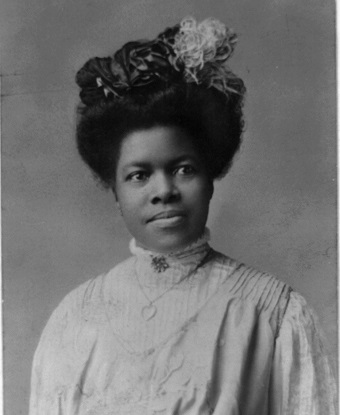
I keep thinking about Ms. Nannie Helen Burroughs, particularly.
An educator and activist, Burroughs’ dedication to Black women and girls, and her belief in the brilliance of them, led to her founding of the National Training School for Women and Girls among many other accomplishments. The writers summarize: “…she embraced both industrial and classical education, and expressed early Black Nationalist and feminist ideologies. She encouraged race pride by celebrating dark skin, and she remained a champion of Black women’s voting and labor rights” (p. 2). I also kept circling back to Burroughs’ motto for her school: “We specialize in the wholly impossible.”
Throughout the book, I read and learned about SO MANY Black women who have done (and do) just that: specialize in the wholly impossible by dedicating their lives and work to collective struggles for Black freedom for Black women, girls and femmes, especially during times when so many others denigrated and dismissed us.
ABWH reminds me that the ancestors are always watching and helping if I just listen. Black women have been here educating children and adults for generations. With schools that have systematically attempted to destroy us, we’ve made our own classrooms in places within our communities, written or revised texts to make them affirming and empowering for Black children, and been the teachers, time and time again. While adversity that included racism and sexism was consistent, our responses to it have always been to creatively organize ways to help as many folks as we can, with whatever tools we have. We have consistently specialized in manifesting the wholly impossible, and we’ve always been creative and resourceful.
Who am I to forget that or to not do the same?
Because there is a foundation of Black women educators who have assured the flourishing of Black children (and many others), certainly I can teach my sun and in the process heap tons of love on him. Surely I can understand that schools can be damaging, traumatic places for Black children and decolonize my own thinking that what we do at home isn’t as good as–if not better–than what schools might be trying to teach. Absolutely I could reach out to all the wonderful early childhood educators I know (his teacher included), and figure out how to design instruction that resonates with his deep desire to know, ask questions, and be immersed in learning.
I would merely be doing what Black women educators have been doing all along, and what Black women educators have been doing for me all along.
And along the way, we could read books written by Black authors that reflect my child (like The Brownies Book); books by other authors of color that offer mirrors into experiences he needs and wants to know more about (like We Are The Water Protectors); and have a few moments of transformation. We also could be aspirational and think about the skills, dispositions, and experiences I want him to have and then think about how to realize them beyond the nearly oppressive chatter of “gaps” and “deficits” and “learning loss” that threatens to drown out any other more important talk about normalizing high achievement for all children in the district.
I’m learning much about early literacy as my sun learns how to read, and I’m also remembering how my own grandmother taught me. She collected scraps of wood from my uncle’s shop. As a carpenter, there were always remainders amidst the piles of sawdust. She had him cut them into smaller sizes, and on those she wrote letters and words. As I gained proficiency, she’d add more combinations of words, requesting more scraps as she needed. She, too, specialized in the wholly impossible. The everyday, wholly impossible. She didn’t see it that way, though; rather she’d simply say “I haven’t done anymore than I should have done.”
Let me remember the foundations on which I stand.
Let me not fall for the okey doke.
Instead, I find myself feeling relief and gratitude for being able to learn about the phenomenal history of Black women who have actively worked to make this world better. I am working hard to remember their names and to make sure my sun learns their names and their accomplishments, too. Daily, I inventory more “funds of knowledge” (Amanti, Neff, Gonzalez, 1992) our family has (and that we’ve always had), and think about how we can use those to connect to other things we desire and need to learn.
I hope to make my world a bit smaller by figuring out how to work together with other Black educators who have the ability to teach through their screens and make it feel like their children never left. I’d like to be able to think about how they can share their brilliance to even more families who are working hard to help their children thrive.
Together, we channel the spirit of Nannie Burroughs–and the millions of Black women who have and will continue to be here–as we continue specializing in the wholly impossible: yesterday, today, tomorrow.
Be encouraged.

Filed under #31DaysIBPOC, Equity, Pandemic, Reading Lives, Writing

This was a delightful interview with Horn Book editor Roger Sutton. Enjoy!
Filed under Pandemic

JANUARY 2020
Parable of the Sower: Graphic Novel Adaptation by Octavia Butler, Damian Duffy and John Jennings
The Book of Delights, Ross Gay (#blackboylit)
I’m Telling the Truth But I’m Lying: Essays, Bassey Ikpi
FEBRUARY 2020
The Yellow House, Sarah Broom
The Tradition, Jericho Brown (#blackboylit)
Teaching My Mother How to Give Birth, Warsan Shire
Ordinary Girls: A Memoir, Jaquira Diaz
Dominicana, Angie Cruz
& More Black, T’ai Freedom Ford
A Bound Woman is a Dangerous Thing: The Incarceration of African American Women from Harriet Tubman to Sandra Bland, DaMaris B. Hill
MARCH 2020
Such a Fun Age, Kiley Reid
Stamped: Racism, Antiracism, and You, Jason Reynolds and Ibram X. Kendi (#blackboylit)
How We Fight For Our Lives, Saeed Jones (#blackboylit)
Dear Edward, Ann Napolitano
Everywhere You Don’t Belong, Gabriel Bump (#blackboylit)
Red at the Bone, Jacqueline Woodson
APRIL 2020
No One is Coming to Save Us, Stephanie Powell Watts (great to teach if/instead of/with The Great Gatsby #DisruptTexts)
How to Be Remy Cameron, Julian Winters #blackboylit
Bingo Love, Tee Franklin, Jenn St.-Onge, Joy San
MAY 2020
A Black Women’s History of the United States, Daina Ramey Berry, Kali Gross
All Boys Aren’t Blue: A Memoir-Manifesto, George M. Johnson
Some Places More Than Others, Renee Watson
allegedly, Tiffany Jackson
JUNE 2020
On The Other Side of Freedom: The Case for Hope, DeRay McKesson
Just Mercy: A Story of Justice and Redemption, Bryan Stevenson
Breathe: A Letter to My Sons, Imani Perry
Every Body Looking, Candace Iloh
Clap When You Land, Elizabeth Acevedo
JULY 2020
Music to My Years: A Mixtape Memoir of Growing Up and Standing Up, Cristela Alonzo
Felix After After, Kacen Callender
Marrow Thieves, Cherie Dimaline
we are never meeting in real life, Samantha Irby
Ordinary People, Diana Evans
AUGUST 2020
Get a Life, Chloe Brown, Talia Hibbert
Party of Two, Jasmine Guillory
The Black Flamingo, Dean Atta (#blackboylit)
Frankly in Love, David Yoon (#bipocboylit)
Queenie, Candice Carty-Williams
SEPTEMBER 2020
My Sister the Serial Killer, Oyinkan Braithwaite
Wild Hundreds, Nate Marshall (#blackboylit)
Memorial Drive, Natasha Trethewey
NOVEMBER 2020
You Exist Too Much, Zaina Arafat
King and the Dragonflies, Kacen Callender
DECEMBER 2020
Patsy, Nicole Dennis-Benn
Friendly suggestion to purchase any of these from your friendly Black-owned bookstore. In Boston (and all around the US b/c they ship), that’s Frugal Bookstore.
Have you read any of these texts? What do you think? And, most importantly because my TBR list is always growing, what are YOU reading and would recommend? Leave me a comment if you’re so moved. Thanks.
Filed under Book Love, Reading Lives
 Dr. Kimberly N. Parker